
Gastropods

Aquatic Snails of the Western Interior Sea
Gastropods are a group of mollusks which includes snails, slugs, sea slugs, limpets and their closest relatives. These animals are an ancestrally shelled group, although in some groups the shells have been secondarily lost or greatly reduced. In the fossil record of the Western Interior Sea, gastropod shell fossils are usually found in deposits associated with estuarine or nearshore environments and their fossils are less common than those of animals like ammonites or bivalves in areas which were further out to sea during the Late Cretaceous
Anatomy
Shell Structure
Gastropod shells are usually formed in a spirally coiled shape and are mostly made of a mineral called calcium carbonate. The shell is structured with a series of whorls that wind around a central column called the columella. The final and largest whorl, the body whorl, holds the internal organs and most of the gastropod’s soft tissues. The smaller whorls above this large spiral together form the spire. At the tip of the shell’s spire there is a point called the apex which includes the protoconch, the earliest shell formed during the larval stage. The opening where the gastropod is able to come out of its shell is called an aperture and the shape of this opening can vary markedly between gastropod groups. The aperture is surrounded by an outer lip and a second inner lip which goes along the edge of the columella.The outside of the shells of gastropods can be covered in a lot of different types of ornamental and protective structures including ridges, grooves and even sharp spines. They also usually show a pattern of growth lines which mark the changes in the shape of the shell over time and give the snail an extra bit of structural strength. In many species the aperture of the shell is covered in a piece of hardened tissue called an operculum.
(BELOW) Features of the external anatomy of the shells of gastropods using the shell of the viviparid snail Campeloma as a reference. The opening of the shell, the aperture, can usually be covered with an operculum in many genera as well.

External Soft Tissues
Gastropods have a soft, unsegmented body that is composed of a head section, a muscular foot, and the visceral mass. The head takes up the front-most part of the body and has one or two pairs of tentacles that these animals use to sense their surroundings. In most cases the longer set of tentacles carries the eyes either at their tips or near their bases, while the shorter tentacles are covered in touch sensors and chemical sensors. The mouth is positioned underneath these tentacles. Like in many types of mollusks, gastropods have a radula in their mouths which they used to scrape off their food. Gastropods are able to move by contracting the muscles of their foot on the lower parts of their bodies. Above this foot structure sits the visceral mass which contains most of the gastropod’s internal organs
(BELOW) External soft tissue anatomy of a gastropod, in this case a terrestrial snail. The broad positions of the anatomical features in this diagram also hold true for most types of aquatic snails.

(BELOW) Types of gastropod shells known from the Cretaceous period in the Western Interior Sea. The colorations and patterns shown in these images are based on those of living gastropods since the true colors of these prehistoric shelled invertebrates remains unknown in most cases.


(Browse by subclass)
Family Aporrhaidae
Anchura
Drepanochilus
Lispodesthes
Family Buccinidae
Aliofusus
Family Cancellariidae
Caveola
Family Capulidae
Trichotropis
Family Cassiopidae
Gymnentome
Family Cerithiidae
Cerithium
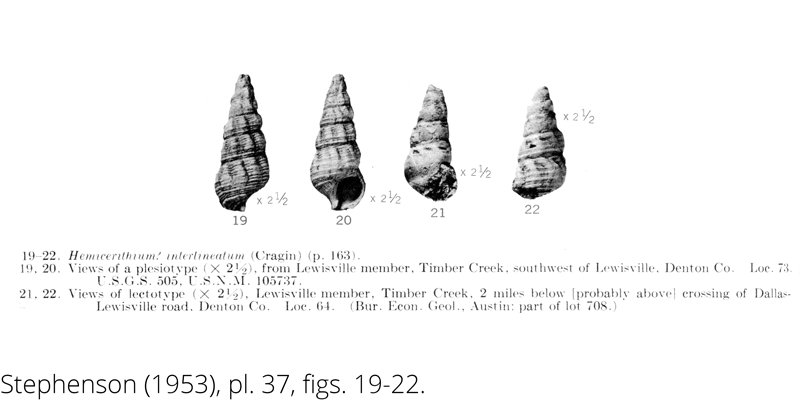
Hemicerithium
Levicerithium
Macrocerithium
Voysa
Vascellum
Family Cerithopsidae
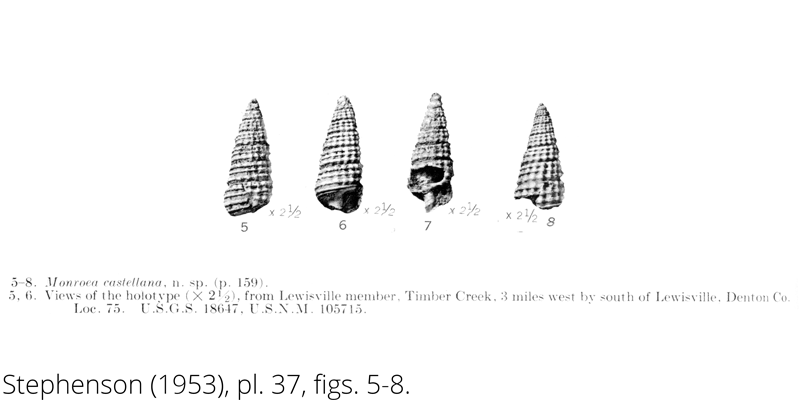
Monroea
Family Epitoniidae
Epitonium
Family Fasciolariidae
Bellifusus
Fasciolaria
Fusinus
Graphidula
Paleosephaea
Piestochilus
Family Gyrotropidae
Lirpsa
Family Naticidae
Euspira
Gyrodes
Lunatia
Natica
Family Pseudomelaniidae
Psedomelania
Family Sarganidae
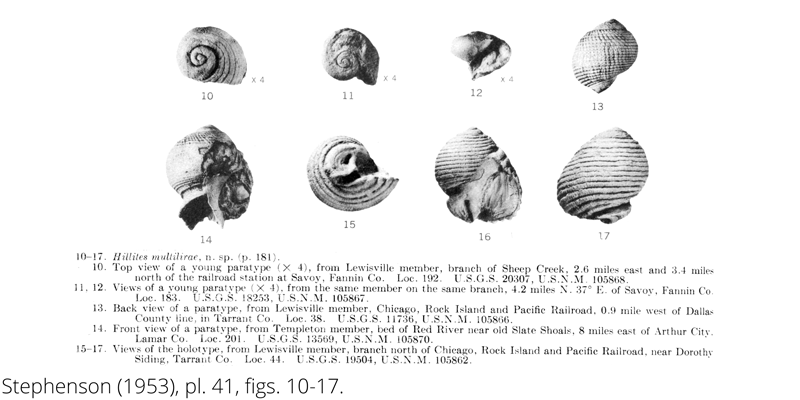
Hillites
Family Thiaridae
Pyrgulifera
Family Turritellidae
Cragina
Mesalia
Turritella
Family Tylostomatidae
Tylostoma
Family Vanikoridae
Vanikoropsis
Family Viviparidae
Campeloma
Family Volutidae
Parvivoluta
Tovula
Family Acteonidae
Fictoacteon
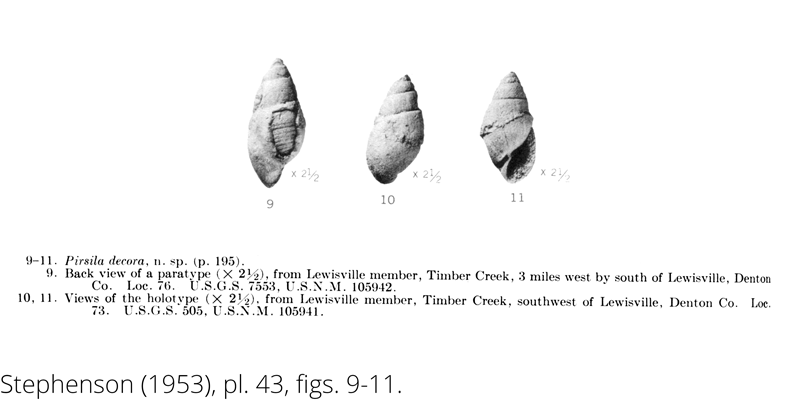
Pirsila
Family Pyramidellidae
Turbonilla
Family Ringiculidae
Cinulia
Ringicula
Family Siphonariidae
Anisomyon
Family Neritidae
Nerita
Family Acmaeidae
Acmaea
Family Eucyclidae
Amberleya
Family Fissurelidae
Diadora
Family Pleurotomariidae
Pleurotomaria
Family Turbinidae
Turbo
Subclass Caenogastropoda
Temporal Range: 350 million years ago - Present
Habitat: Mostly aquatic, some terrestrial lineages
Families in the Western Interior Sea: Aporrhaidae, Buccinidae, Cancellariidae, Capulidae, Cassiopidae, Cerithiidae, Cerithopsidae, Epitoniidae, Fasciolariidae, Gyrotropidae, Naticidae, Pseudomelaniidae, Sarganidae, Thiaridae, Turritellidae, Tylostomatidae, Vanikoridae, Viviparidae, Volutidae
Caaenogastropoda is a large subclass of gastropods which accounts for more than half of all known snail species, including many aquatic animals as well as a few terrestrial lineages. Most of these animals have external shells although in a few aquatic genera had developed smaller shells enclosed within the soft tissues comprising the rest of their bodies. Some, like the viviparids, are able to live in freshwater environments. Their shells are not covered in a layer of shiny nacre and usually have an operculum. The members of this subclass usually go through a process called torsion as part of their larval stage, where their bodies are twisted around anti-clockwise such that the rear part of the animal’s body sits above their heads. They tend to have only a single pair of gill arrays.

(ABOVE) Shells of gastropods of the family Aporrhaidae of the Western Interior Sea. (A) Anchura, (B)Drepanochilus, (C) Lispodesthes

(ABOVE) Shell of the gastropod Aliofusus balaniformis of the family Buccinidae, found in Cenomanian deposits

(ABOVE) Shell of the gastropod Caveola bellsana of the family Cancellariiidae from the Cenomanian stage

(ABOVE) Shell of the gastropod Trichotropis shumardi of the family Capulidae, found in Albian deposits

(ABOVE) Shell of the gastropod Gymnentome valida of the family Capulidae, found in Cenomanian deposits

(ABOVE) Shells of gastropods of the family Cerithiidae of the Western Interior Sea. (A)Hemicerithium (B)Levicerithium, (C) Cerithium, (D) Macrocerithium, (E) Voysa, (F) Vascellum

(ABOVE) Shell of the gastropod Monroea castellana of the family Cerithopsidae, found in Cenomanian deposits

(ABOVE) Shell of the gastropod Epitonium stellanum of the family Epitoniidae, found in Cenomanian deposits

(ABOVE) Shells of gastropods of the family Cerithiidae of the Western Interior Sea. (A) Graphidula (B) Fusinus, (C)Bellifusus, (D) Fasciolaria, (E) Paleosephaea, (F) Piestochilus

(ABOVE) Shell of the gastropod Lirpsa cornuata of the family Gyrotropidae, found in Cenomanian deposits

(ABOVE) Shells of gastropods of the family Naticidae of the Western Interior Sea. (A) Natica, (B) Gyrodes, (C)Lunatia, (D) Euspira

(ABOVE) Shell of the gastropod Pseudomelania ferrata of the family Pseudomelaniidae, found in Cenomanian deposits

(ABOVE) Shell of the gastropod Hillites multilirae of the family Sarganidae, found in Cenomanian deposits

(ABOVE) Shell of the gastropod Pyrgulifera costata of the family Thiaridae, found in Cenomanian deposits

(ABOVE) Shells of gastropods of the family Turritellidae of the Western Interior Sea. (A) Craginia, (B) Mesalia, (C)Turritella

(ABOVE) Shell of the gastropod Tylostoma elevata of the family Tylostomatidae, found in Albian deposits

(ABOVE) Shell of the gastropod Vanikoropsis nebrascensis of the family Vanikoridae, found in Campanian deposits

(ABOVE) Shell of the gastropod Campeloma nebrascensis of the family Vanikoridae, found in Maastrichtian deposits

(ABOVE) Shells of gastropods of the family Volutidae of the Western Interior Sea. (A) Tovula, (B) Parvivoluta
Gallery: Caenogastropoda - click to expand images







Subclass Heterobranchia
Temporal Range: 409 million years ago - Present
Habitat: Includes most terrestrial snails and slugs as well as some aquatic snails
Families in the Western Interior Sea: Acteonidae, Pyramidellidae, Ringiculidae, Siphonariidae
Heterobranchia is a subclass of gastropods which includes most of the more familiar types of land snails and slugs, along with aquatic sea slugs and sea hares. The group was once further subdivided into the Opisthobranchs, a diverse group of aquatic snails which included bubble shells and nudibranchs, and the Pulmonates, which included most land snails as well as some aquatic forms. Today the classification of heterobranchs is somewhat more complicated and a lot of animals have now been moved over to an informal classification called “Lower Heterobranchia”. Most land snails and sea slugs are now part of the infraclass Ethyneura.

(ABOVE) Shells of gastropods of the family Acteonidae of the Western Interior Sea. (A) Fictoacteon (B) Pirsila

(ABOVE) Shell of the gastropod Turbonilla of the family Pyramidellidae

(ABOVE) Shells of gastropods of the family Ringiculidae of the Western Interior Sea. (A) Cinulia (B) Ringicula

(ABOVE) Shell of the gastropod Anisomyon borealis of the family Siphonariidae, found in Campanian deposits
Gallery: Heterobranchia - click to expand images


Subclass Neritimorpha
Temporal Range: 484 million years ago - Present
Habitat: Mostly aquatic, some terrestrial lineages
Families in the Western Interior Sea: Neritidae
Neritimorpha is a subclass of snails which includes both aquatic and terrestrial lineages. In many of these animals inner walls of the parts of the shell left behind from their larval stages in the form of the protoconch are resorbed once the snails mature. In species who have an operculum, these structures are composed mostly of calcium-based material. Their shells often tend to be rather short with the upper parts of their spires appearing reduced.

(ABOVE) Shell of the gastropod Nerita ornata of the family Neritidae, found in Cenomanian deposits
Gallery: Neritimorpha - click to expand images


Subclass Patellogastropoda
Temporal Range: 450 million years ago - Present
Habitat: Aquatic, attached to surfaces
Families in the Western Interior Sea: Acmaeidae
The subclass Patellogastropoda is an unusual group of gastropods, often known by the common name “true limpets” who anchor themselves to hard surfaces and have wide, shallow, cone-shaped shells. In many types of true limpets the outer shape of the shell spiral is lost and these animals instead have long, thin ridges running from the tallest part of the shell to its outer edges. Other true limpets have smooth shells.

(ABOVE) Shell of the gastropod Acmaea pilleolus of the family Acmaeidae, found in Cenomanian deposits
Gallery: Patellogastropoda - click to expand images


Subclass Vetigastropoda
Temporal Range: 421 million years ago - Present
Habitat: Aquatic
Families in the Western Interior Sea: Eucyclidae, Fissurelidae, Pleurotomariidae, Turbinidae
The subclass Vetigastropoda is a group of aquatic snails which includes keyhole limpets, abalones and turban shells. They seem to be one of the most basal groups of snails. Some members of this group closely resemble limpets, although they are not very closely related to true limpets in the subclass Palletogastropoda. These keyhole limpets can be distinguished from true limpets by the opening on the tops of their shells. Other genera have spiral-shaped shells which range in shape from taller conical forms to shorter, more compressed or dome-shaped forms. They usually have an operculum which covers their shell apertures.

(ABOVE) Shell of the gastropod Amberleya mudgeana of the family Eucyclidae, found in Albian deposits

(ABOVE) Shell of the gastropod Diadora bartonvillensis of the family Fissurelidae, found in Albian deposits

(ABOVE) Shell of the gastropod Pleurotomaria austinensis of the family Pleurotomariidae, found in Cenomanian deposits

(ABOVE) Shell of the gastropod Turbo serratus of the family Turbinidae found in Cenomanian deposits
Gallery: Vetigastropoda - click to expand images


Suggested References: Gastropods
Selden, P. A., ed. (2009). “Treatise on Invertebrate Paleontology. Part L, Mollusca 4, Revised, vol. 2.” The University of Kansas Paleontological Institute. Lawrence, Kansas
Stephenson, L.W., & Stenzel, H.B. (1952). Larger invertebrate fossils of the Woodbine formation (Cenomanian) of Texas, with Decapod Crustaceans from the Woodbine formation of Texas.
Digital Atlas of Ancient Life. (n.d.). “Gastropoda”. Cretaceous Atlas of Ancient Life | Gastropoda. https://www.cretaceousatlas.org/classes/gastropoda/
Everhart, M.J. (2017). “Oceans of Kansas - A Natural History of the Western Interior Sea, Second Edition”. Indiana University Press, 460 pp.
Brinster, K. F. (1970). “Molluscan Paleontology of the Pierre Shale (Upper Cretaceous), Bowman County, North Dakota (MS)”. University of North Dakota.