Guide To The Megafauna Of The Pleistocene
Ice age giants in the Midwest

The Pleistocene epoch began 2.58 million years ago and ended at the start of the Holocene epoch 11,700 years ago. This stretch of time saw the Midwest play host to many different types of giant ancient land mammals and reptiles, including members of groups which are entirely absent from the North American continent today. Relatives of today's elephants, including mammoths and mastodons, made their homes in the open plains and pine forests, while giant ground sloths browsed on woody vegetation. Parts of the southern plains in Oklahoma and Texas were even home to huge armadillos which could grow to be the size of a small car! Whether due to a changing climate or the arrival of humans, many of these ancient animals disappeared towards the end of the Pleistocene epoch, with most of the largest land mammals having vanished by around 10,000 years ago.

Browse animals by taxonomic order/family
Or scroll to the bottom of the page to browse by genus
Extinct Pleistocene Mammals
Elephant relatives
(Proboscidea)
Mastodons, Mammoths, Gomphotheres

Cats and Dogs
(Carnivora)
Pantherines, Saber-Toothed Cats, Wolves

Odd-Toed Ungulates
(Perissodactyla)
Horses,
Tapirs


Rodents
(Rodentia)

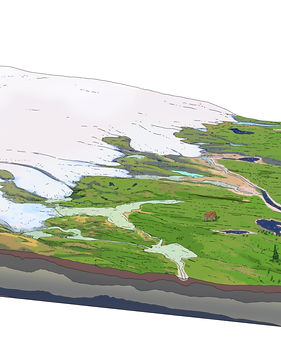
The Pleistocene Landscape
Glaciers, tundras and pine forests covered the corn belt
The midwest as it was inhabited by the megafauna of the Pleistocene was very different from the land we known today. 700,000 years ago glaciers reached as far south as Kansas City and the area that would one day become the Great Lakes was covered by thousands of feet of ice.