
The Landscape of the Pleistocene
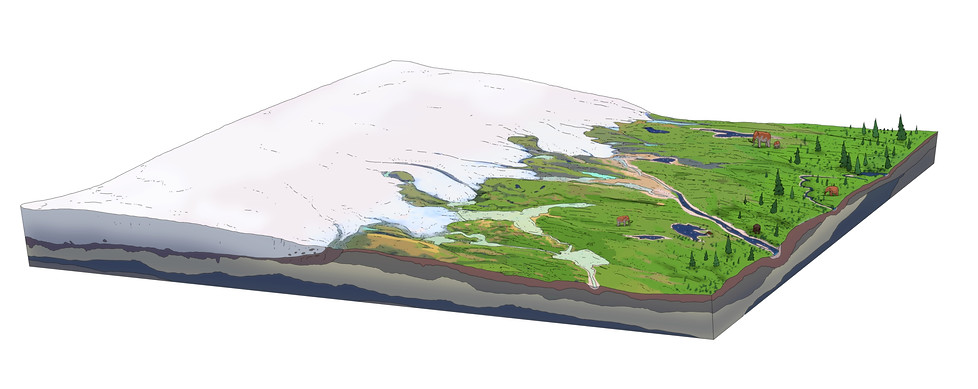
(ABOVE) Glaciers and ice sheets advancing across the Midwest had a profound impact on the surrounding landscape. Outwash plains on the outer margins of ice sheets were covered in braided streams and small kettle lakes.
A Land of Ice Sheets, Prairies and Forests
During the Pleistocene epoch the Midwest was dramatically shaped by repeated advances and retreats of continental glaciers. Massive ice sheets, sometimes more than a mile thick, covered much of the region, carving the landscape and transporting enormous amounts of rock, sand, gravel, and clay. As the glaciers moved, they eroded bedrock and deposited sediments that later formed fertile plains, rolling hills, and moraines. The Great Lakes began to take shape as glacial ice deepened existing river valleys and left behind basins that filled with meltwater.
The environment of the Midwest changed repeatedly in response to the shifting climate. During colder periods, tundra and boreal forests dominated the landscape. These environments supported animals adapted to harsh conditions. Mammoths, mastodons, giant ground sloths, and other large mammals roamed across open grasslands and woodlands. As glaciers retreated during warmer intervals, forests expanded and diverse plant communities developed. Meltwater from the ice sheets created extensive rivers, lakes, and wetlands.
Forests and Wetlands
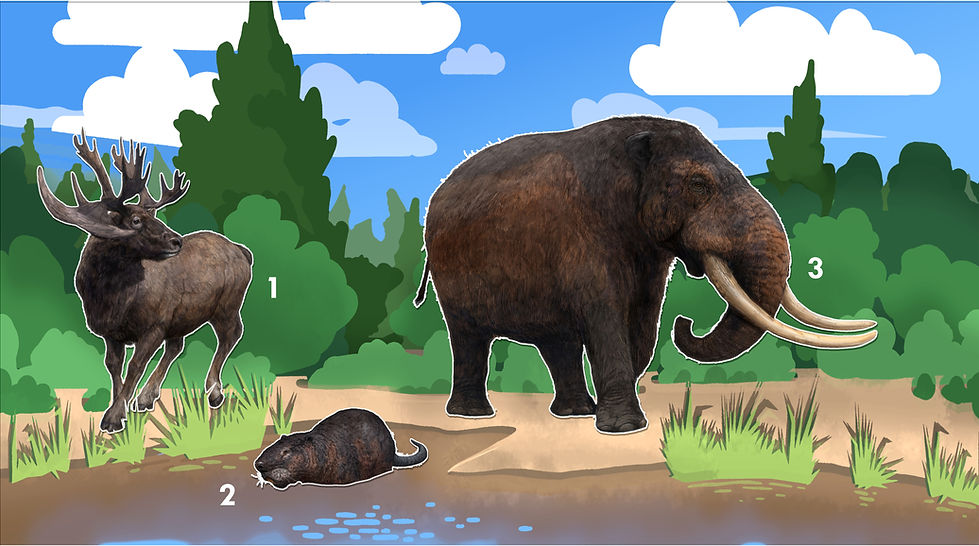
(ABOVE) Pleistocene woodlands were often found near rivers and wetland habitats and were home to many types of browsing and semi-aquatic mammals. Cervalces (1), Castoroides (2), American mastodon (3)
Pleistocene forested environments in the Midwest occurred primarily during warmer interglacial periods and in sheltered areas near rivers, lakes, and wetlands. These forests varied from northern boreal woodlands dominated by evergreen trees to mixed deciduous forests containing oak, maple, and aspen trees. The composition and extent of these forests shifted repeatedly as climatic conditions changed with the advance and retreat of the ice sheets which dominated much of the higher latitudes of North America.
Pleistocene woodlands supported a diverse assemblage of mammals. Mastodons were among the most characteristic forest inhabitants, browsing on twigs, leaves, shrubs, and wetland plants rather than grazing on grasses like mammoths. White-tailed deer, moose, and ancient peccaries like Platygonus also occupied forest habitats.
.jpg)
(ABOVE) Many forest habitats in parts of Kansas and Nebraska may have been composed of large clusters of aspen trees, similar to those seen in parts of the American west today. Photo credit: Lisa Kennedy, US Forest Service
.jpg)
(ABOVE) A pine forest growing along the edge of a stream in the Yukon. These types of forests may have grown alongside more open tundras in areas where water was regularly available, near glacial braided streams for example. Photo credit: Kristine Sowl, USFWS, YDNWR
Grasslands

(ABOVE) Grazing animals would have been common sights in the Pleistocene grasslands of the Midwest. These included the extinct pronghorn Stockoceros (1), The Columbian mammoth (2), and the giant bison (3)
Grasslands and prairies covered extensive portions of the Midwest in the Pleistocene. These open landscapes supported a rich community of plants and animals adapted to grazing environments and seasonal climate extremes. Both tallgrass and shortgrass prairies were present in different areas during this epoch, with the types of floral communities being heavily dependent upon the average yearly temperature and the amount of rainfall present within a given area. Some grassland environments closely resembled savannah environments, with patches of burr oak trees and other hardy plants surrounded by expanses of open grass. Relatives of today’s bluestem grasses had existed in the Midwest since around the Miocene epoch and remained an important part of these Pleistocene grasslands and prairies. The vegetation was dominated by hardy grasses, sedges, and herbaceous flowering plants capable of surviving cold winters and periodic drought.
Among the most notable animals were mammoths, whose flat tooth surfaces were well adapted for chewing and processing grasses and tougher silicate-rich plant materials. Pleistocene communities of large grazing mammals also included ancient bison, horses and camels, all of which fed on grasses and other low-growing herbaceous vegetation.
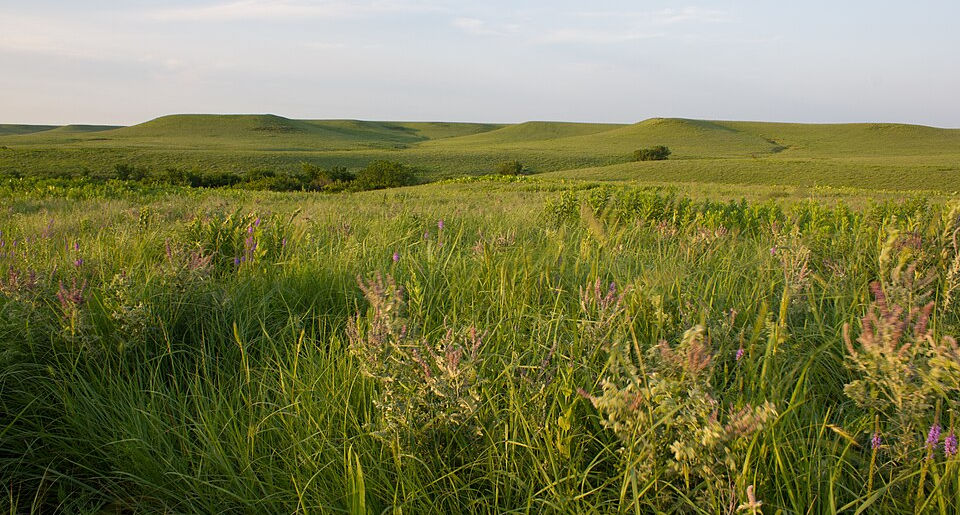
(ABOVE) The landscape of the Flint Hills in eastern Kansas. These types of tallgrass prairies would have been found in warmer parts of the Midwestern region during the Pleistocene, home to many types of wildflowers and bluestem grasses. Photo credit: Greg Kramos/USFWS
Tundras
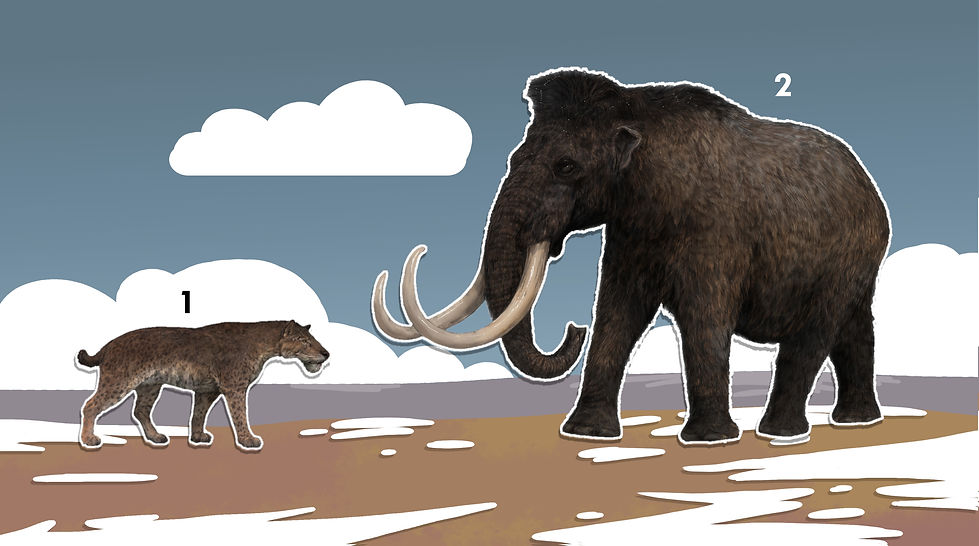
(ABOVE) Pleistocene animals found in tundra habitats included the saber-toothed cat Homotherium (1) and the woolly mammoth (2)
During the Pleistocene epoch, parts of the Midwest near the edges of the Laurentide ice sheets supported many tundra environments. These landscapes were cold, windy, and relatively dry, with few trees and large expanses of short grasses and cold-resistant plants. Beneath the ground there were layers of permanently frozen soil known as permafrost. These tundra environments in the northern Midwest were home to populations of woolly mammoths, as well as herds of the extant genus of muskox, Ovibos.
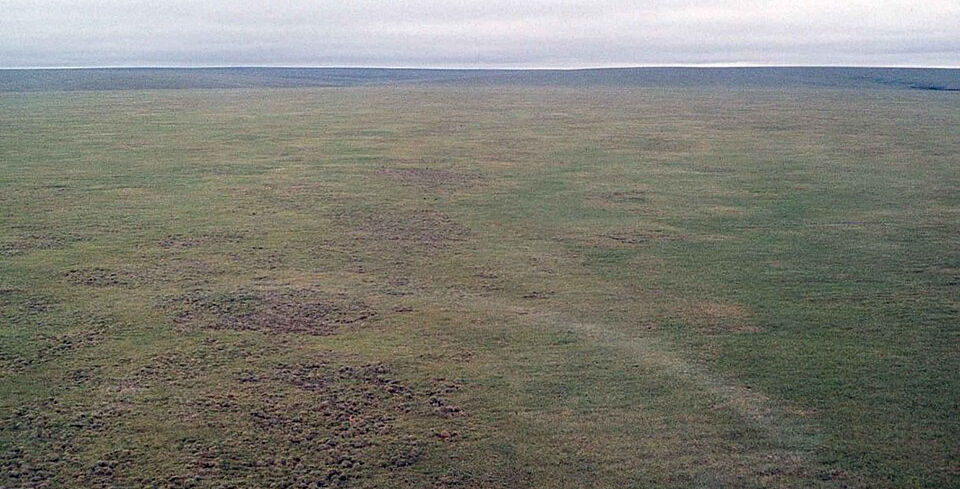
(ABOVE) Tundra environments are open areas covered in short grasses and sedges with a thick layer of permafrost beneath the surface layer of earth. Although they're found in polar areas today, they once could be found along the margins of ice sheets which extended deep into North America during the Pleistocene epoch. Photo credit: U.S. Fish and Wildlife Service
The Legacy of the Ice Sheets
Many parts of the Midwest were once covered by the Laurentide Ice Sheet, a continental glacier that advanced southward from the area around the Hudson Bay region during repeated glacial periods. At its greatest extent, the ice covered nearly all of the upper Midwest, leaving only a few areas untouched by direct glaciation, namely the Driftless Area of Wisconsin, Minnesota, Iowa, and Illinois.The region near the glacier's edge was characterized by cold tundra and steppe-tundra environments, while braided streams and temporary glacial lakes formed along the ice margin.
(BELOW) A map of the Midwest as it appeared during the last ice age. As the Laurentide ice sheet retreated it gouged deep troughs into the ground and widened pre-existing valleys, eventually forming what we now know as the Great Lakes

As the ice advanced, it profoundly altered the landscape. The moving glaciers scraped and polished bedrock, carved grooves known as glacial striations, smoothed hills, filled valleys, and helped create the basins that later became the Great Lakes. When the climate warmed and the glaciers retreated, they released enormous quantities of sediment that had been carried within the ice. This material, known as glacial drift, blanketed much of the Midwest and buried older bedrock beneath thick layers of clay, silt, sand, gravel, and boulders.
(BELOW) As glaciers and ice sheets retreat they leave behind distinct marks on the surrounding landscapes. Water draining through the glaciers in narrow passages called moulins can pool into lakes along the edge of the ice, drain into the bedrock below or flow outwards as streams. Moraines, eskers and kames are all formed from sediment which has been shifted or deposited by the glacier. Small depressions in the ground can collect water and form small kettle lakes.
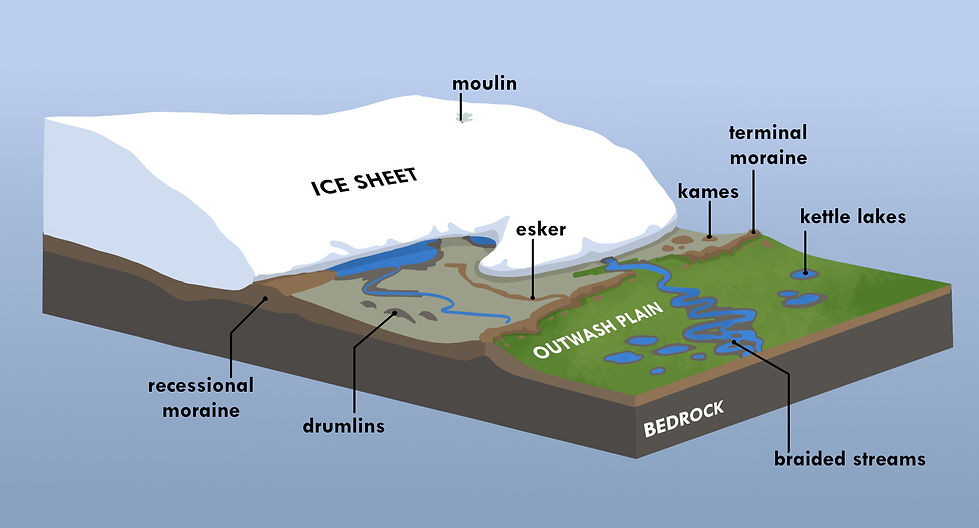
The retreating glaciers left behind many types of landforms that can be seen all across the modern Midwest. Ridges of sediment called moraines mark former ice sheet margins. Other glacial features included drumlins, kettle lakes and small hills called kames. The retreating ice sheets also reshaped drainage systems and formed thousands of small lakes and new wetland ecosystems across the northern Midwest.

(ABOVE) A kettle near Ohlstadt, Germany. These small depressions are formed from blocks of ice left over as a glacier retreats. They are sometimes filled with water forming a small lake. Photo credit: Andreas Schikora
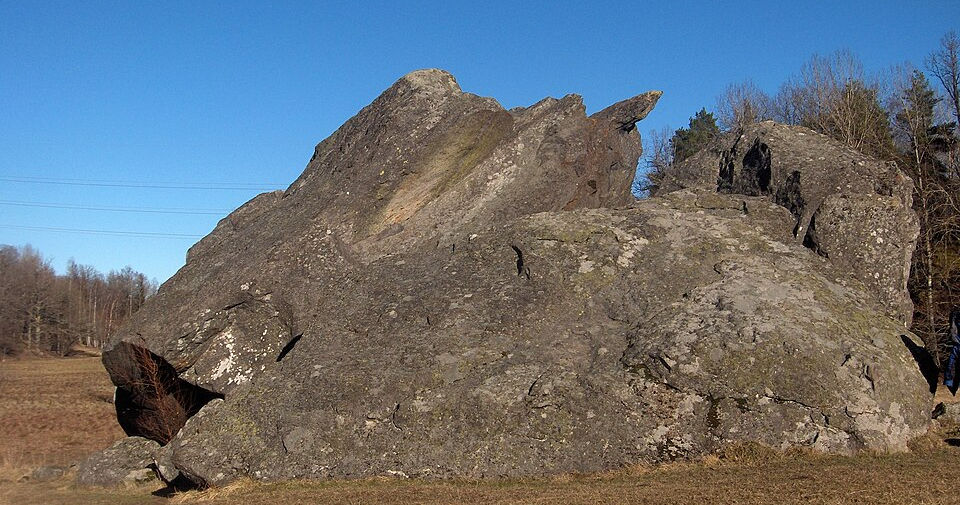
(ABOVE) Glacial erratics are blocks of rock carried by glaciers as they advance. These rocks, some of which can be quite large, are later deposited elsewhere once the ice retreats. These rocks can travel hundreds of miles away from where they originated. This erratic is located near Ågestasjön, Sweden. Photo credit: Leo Johannes

(ABOVE) Medial moraines formed by the Kennicott glacier in Alaska. Moraines often form along the outer edges of ice sheets and glaciers but in some cases they form along the center of a glacier, running along the length of the ice. Photo credit: Jacob W. Frank, NPS